


Development Finance Is Getting Harder. But Not for the Reasons People Think
- Daniel Campbell

- Feb 2
- 2 min read
There’s a growing narrative in the property world that development finance is “drying up”.
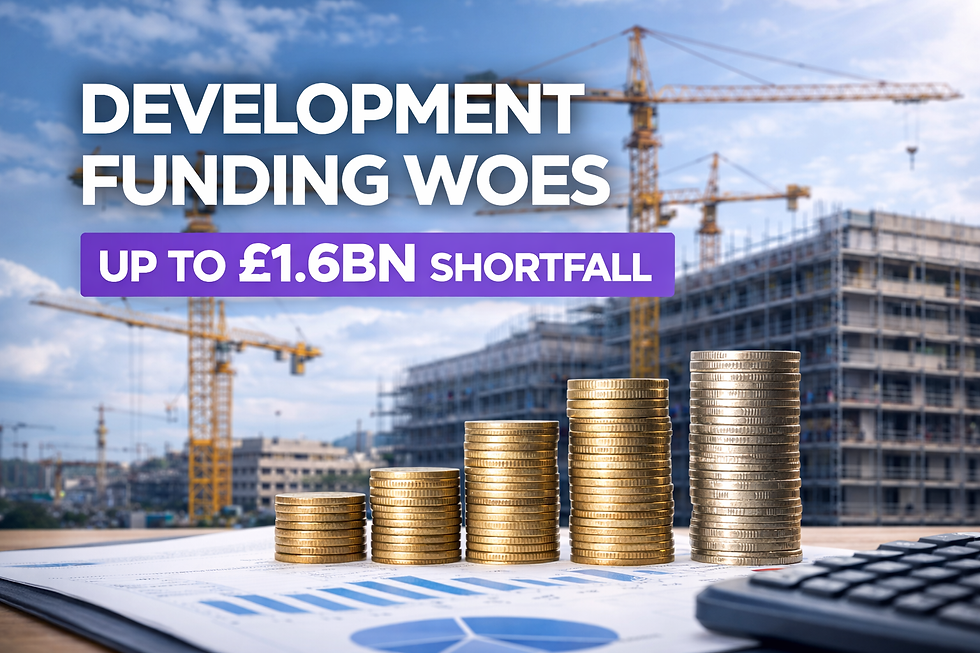
Fewer approvals, tougher terms, bigger deposits. On the surface, it feels true.
But look closer and a different picture starts to emerge.
Money hasn’t disappeared from the development finance market. What has changed is the appetite for poorly thought-through projects. Lenders aren’t retreating, they’re filtering.
Where deals are falling down
Most rejected applications aren’t being turned away because of rates or loan size. They’re being declined because the fundamentals don’t stack up anymore.
Common issues we’re seeing:
GDVs based on outdated comparables
Build costs underestimated “to make the numbers work”
Planning risk brushed aside instead of addressed
Exit strategies that rely on best-case refinancing assumptions
In a slower, more cautious market, lenders simply aren’t willing to take those leaps anymore, and frankly, they shouldn’t.
What lenders actually want to see now
The bar hasn’t been raised across the board. It’s been raised in specific places.
Strong applications still share the same traits:
Conservative, evidence-backed GDVs
Clear contractor pricing and contingency
A believable exit, even if rates stay higher for longer
Borrowers who understand their scheme inside out
Developers who can demonstrate control over their project, not just optimism, and are still getting deals funded. Often on better terms than expected.
Why this is good news for experienced developers
This shift is quietly separating the market.
When easy money was everywhere, good schemes competed with weak ones. Now, quality stands out again. Lenders are spending more time on fewer deals, and when they like one, they’re backing it properly.
We’re seeing:
More sensible leverage discussions
Better engagement from credit teams
Greater flexibility on structure when risk is well explained
In short, lenders are becoming partners again, not just balance sheets.
The real risk right now
The biggest danger isn’t that funding is unavailable. It’s that developers assume it is, and don’t even put strong projects forward.
That hesitation is costing people opportunities.
Sites are still being bought. Schemes are still being funded. The difference is that deals need to be designed, not hoped through.
Final thought
Development finance hasn’t become harder, it’s become more honest.
If your numbers work, your planning is solid, and your exit stands up under scrutiny, lenders are still very much open for business.
And if they don’t?It’s usually a sign the project needs adjusting, not abandoning


Comments